Hidden Gems of Uzbekistan: 12 Places Most Tourists Miss
12 hidden gems of Uzbekistan off the classic route: the Savitsky Museum, the Aral Sea, desert fortresses, yurt camps, Termez and Fergana crafts, with how to get there and how long to stay.
The hidden gems of Uzbekistan lie just off the classic Tashkent – Samarkand – Bukhara – Khiva route: an art museum in the desert, ships stranded on the dry bed of the Aral Sea, ancient fortresses, yurt camps, Buddhist ruins and craft towns. Most are a day trip or one extra night from a city on your route. Here are 12, with why to go, how to get there and how much time to give each.
How to add hidden gems to a classic route
- From Khiva: the desert fortresses, Nukus and the Aral Sea.
- Between Samarkand and Bukhara: Nurata, Aydarkul lake, Sarmishsay, Urgut and Shakhrisabz.
- From Tashkent: the mountains, the Fergana Valley and Termez.
Trains reach Nukus, Termez, Navoi, Jizzakh, Kokand and Margilan (see trains in Uzbekistan). For the last stretch you usually need a taxi or a car with a driver, which your hotel can arrange.
Off the beaten path in the west: Karakalpakstan and Khorezm
1. The Savitsky Museum in Nukus
- Why go: in Soviet times the collector Igor Savitsky gathered tens of thousands of works in this remote city, including avant-garde paintings that were banned elsewhere, plus Karakalpak jewellery and textiles. See the Savitsky Museum.
- Getting there: fly or take the overnight train from Tashkent, or drive about 3 hours from Khiva.
- Time: half a day, or a full day for art lovers.
2. Moynaq and the Aral Sea
- Why go: Moynaq was once a fishing port. The sea has retreated well over 100 km, and rusting boats now sit on the sand below the town, a stark sign of an environmental disaster.
- Getting there: about 3 hours by car north of Nukus. To reach today's shoreline you need a 4x4 tour from Nukus, usually with a night in a yurt camp or tent.
- Time: a long day trip from Nukus for Moynaq; 2–3 days for the sea itself.
3. The desert fortresses of Elliq Qala
- Why go: this "fifty fortresses" area is dotted with mud-brick castles of ancient Khorezm, many around 2,000 years old. Ayaz Kala stands on a hill above the desert, with hardly anyone around. See Ayaz Kala and Toprak Kala.
- Getting there: about 1.5–2 hours by car from Khiva, easy to visit on the drive from Khiva to Nukus.
- Time: half a day to a full day; a yurt camp near Ayaz Kala lets you stay overnight.
Unusual places between Samarkand and Bukhara
4. Nurata and Aydarkul lake
- Why go: Nurata is a quiet pilgrimage town with a spring full of sacred fish and a ruined fortress linked by legend to Alexander the Great. North of it lies Aydarkul, a large lake in the Kyzylkum desert formed in 1969 by floodwater from the Syr Darya. Yurt camps there offer camel rides and dinner by the fire.
- Getting there: about half a day by car from Samarkand or Bukhara; most camps arrange transfers.
- Time: one night, ideally on the way between the two cities.
5. Sarmishsay petroglyphs
- Why go: a gorge in the hills near Navoi holds thousands of rock carvings of animals and hunters, some thousands of years old.
- Getting there: Navoi is on the railway between Samarkand and Bukhara; from there it is roughly an hour by car.
- Time: half a day.
6. Urgut bazaar
- Why go: this market town is known for its suzani (embroidered textiles), old and new, next to a busy local market.
- Getting there: under an hour by taxi from Samarkand. Urgut bazaar is busiest on weekend mornings, especially Sunday.
- Time: a morning.
7. Shakhrisabz and the Ak-Saray palace
- Why go: Shakhrisabz is Amir Timur's home town. Only parts of the giant gateway of his Ak-Saray ("White Palace") survive, but they still show its scale and fine tilework. The historic centre is a UNESCO World Heritage site.
- Getting there: about 2 hours by car from Samarkand over the Takhtakaracha pass. In winter the pass can close and the road around it takes longer.
- Time: a day trip from Samarkand.
Hidden gems in the south: Surkhandarya
8. Termez Buddhist sites
- Why go: around 2,000 years ago Termez, on the Amu Darya, was a centre of Buddhism. Fayaz Tepe has a monastery around a restored stupa, Kara Tepe a hillside monastery with caves, and the Termez Archaeological Museum shows finds from both.
- Getting there: a domestic flight or an overnight train from Tashkent, or a long day's drive from Samarkand through Shakhrisabz.
- Time: 1–2 days. Kara Tepe lies close to the Afghan border and access rules have changed over the years, so go with a local guide and check before you travel.
9. Boysun mountain villages
- Why go: the mountain district of Boysun keeps old traditions of music, crafts and village life, and its "cultural space" is on UNESCO's intangible heritage list. Expect gorges, old villages and simple homestays.
- Getting there: Boysun is on the road and railway between Samarkand and Termez, a natural stop on the way south.
- Time: 1–2 days, best with a local guide.
Off the beaten path in the Fergana Valley
10. Margilan silk and Rishtan ceramics
- Why go: at the Yodgorlik silk factory in Margilan you follow the whole process of hand-made ikat silk, from boiling cocoons to dyeing threads and weaving on wooden looms. In Rishtan, family workshops make ceramics with a deep blue-green glaze, and potters often show their work.
- Getting there: the train from Tashkent to Margilan takes about 4–5 hours. Rishtan is about an hour by car from Margilan or Kokand.
- Time: 1–2 hours at each; together a good full day.
11. The Khudoyar Khan palace in Kokand
- Why go: Kokand was a khanate's capital, and the Khudoyar Khan palace, built in the 1870s, has one of the most colourful tiled façades in the country, with a museum inside.
- Getting there: Kokand is the valley's first big stop on the train from Tashkent.
- Time: 2–3 hours, easy to combine with Margilan.
Mountains near Tashkent and Jizzakh
12. Chimgan, Ugam-Chatkal and Zaamin
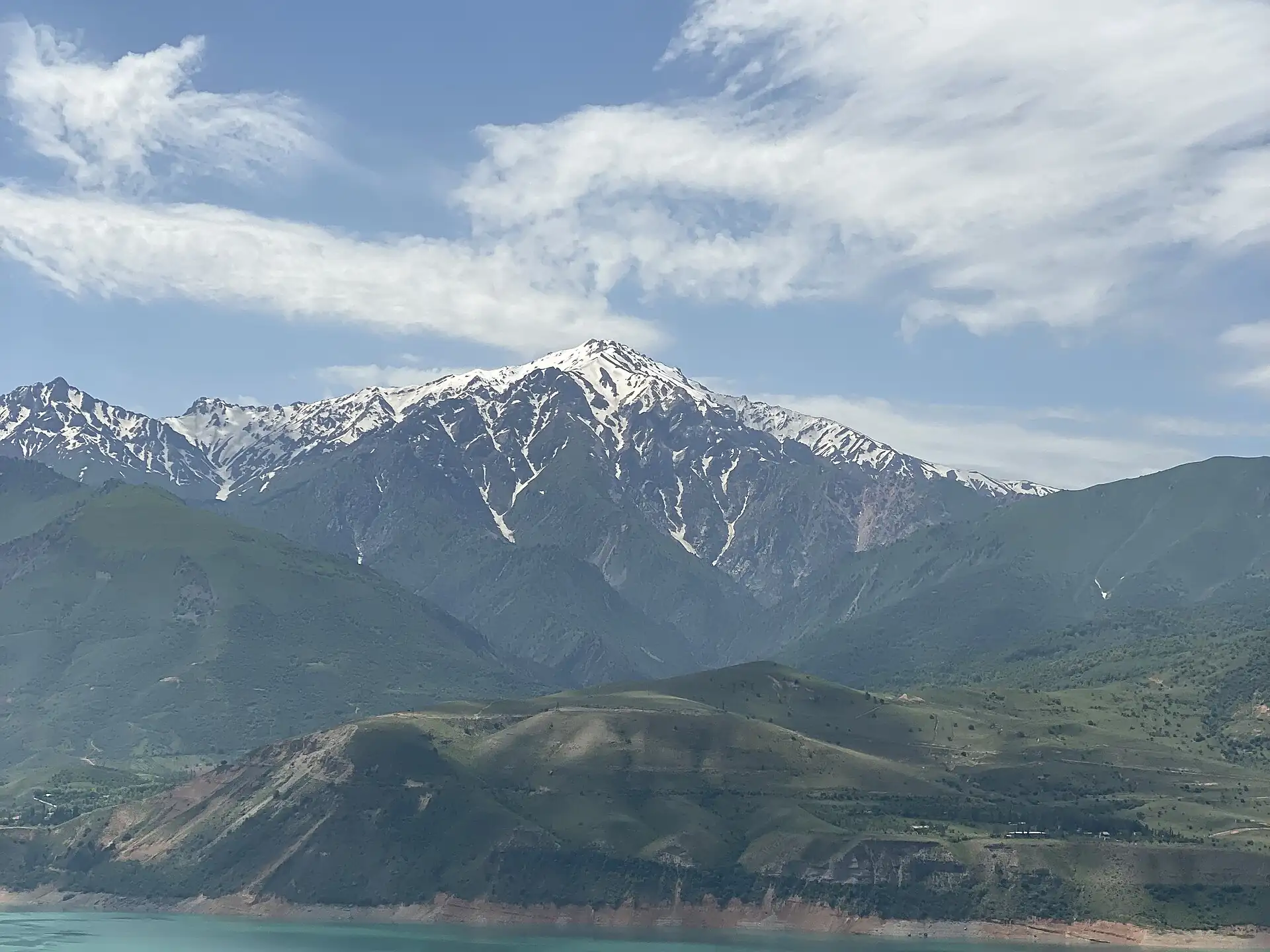
- Why go: Chimgan and the Ugam-Chatkal National Park, above the Charvak reservoir, have hiking trails, waterfalls, chairlifts and winter skiing. Zaamin National Park in the Turkestan range is known for juniper forests and cool summer air.
- Getting there: Chimgan is about 1.5–2 hours by car from Tashkent. Zaamin is about 2 hours by car from Jizzakh, on the Tashkent – Samarkand railway.
- Time: a day for Chimgan; 1–2 for Zaamin.
FAQ
What are the best hidden gems in Uzbekistan?
The Savitsky Museum in Nukus, the ship graveyard at Moynaq, the Elliq Qala fortresses, a yurt camp by Aydarkul lake and the craft towns of the Fergana Valley are the easiest to add to a first trip.
Can you still see the Aral Sea?
Yes, but far from the old shore. Moynaq has the stranded ships; for the water itself you need a 4x4 tour of 2–3 days from Nukus.
Is it safe to travel off the beaten path in Uzbekistan?
Uzbekistan is generally safe, including rural areas. The main risks are heat, long drives and patchy phone signal, so use a reliable driver.
Do I need a guide for these places?
Not for Nurata, Urgut, Shakhrisabz or the Fergana Valley. A driver or guide helps for the desert fortresses, the Aral Sea, Sarmishsay, Boysun and Termez.
How many extra days do I need?
Add 1–2 days for the fortresses and Nukus, 2–3 more for the Aral Sea, one night for Aydarkul, 2 days for the Fergana Valley and 2–3 days for Termez and Boysun.
Plan your trip
See how these detours fit a full route in our Uzbekistan itinerary, find a local guide for the remote sites on our guides page, or let the AI trip planner build a route for you.