Uzbek Food: 20 Dishes to Try, from Plov to Somsa
Uzbek food guide: 20 dishes to try, from plov and somsa to lagman and Samarkand bread, plus vegetarian options, table etiquette, where to eat and cooking classes.
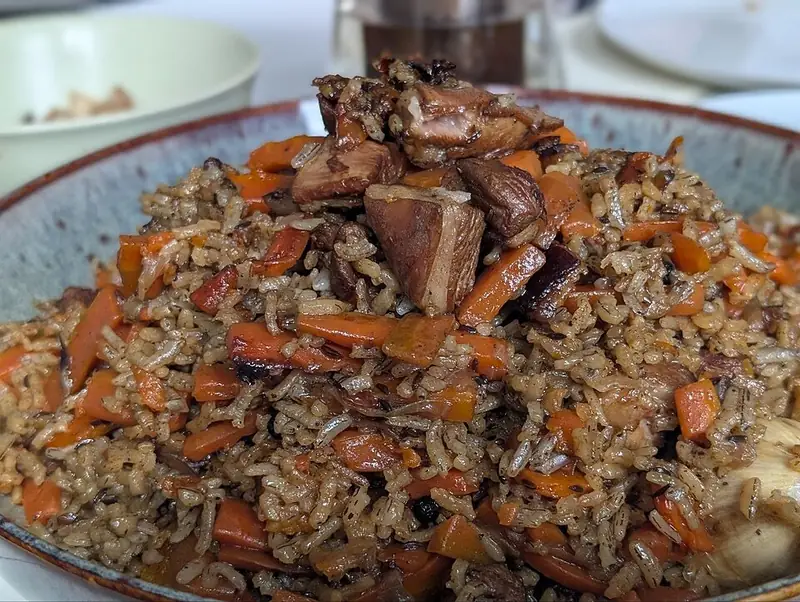
Uzbek food is hearty home cooking built on lamb, beef, rice, noodles and fresh bread from the clay tandir oven. The first dish to try is plov, but there is much more: flaky somsa, hand-pulled lagman, dumplings, slow-cooked stews and sweets with green tea. Here are 20 Uzbek dishes worth ordering, where to eat them and how to behave at the table.
What is the national dish of Uzbekistan?
1. Plov (osh in Uzbek) is rice cooked in a big cast-iron kazan with meat, onions, plenty of yellow and orange carrots, cumin and oil. Chickpeas, raisins, barberries or a whole head of garlic often go in too. In 2016 UNESCO added Uzbek plov culture and traditions to its list of intangible cultural heritage.
Plov is a lunch dish. Plov centres cook it in the morning and often sell out by early afternoon, so go before about 1–2 pm.
Regional styles of plov
- Samarkand plov — the layers are not stirred. The rice cooks on top of the meat and carrots, and the meat is laid over the rice to serve.
- Tashkent plov — everything is mixed, often with chickpeas, quail eggs and slices of qazi (horse-meat sausage).
- Bukhara plov — often sweeter, with more raisins and dried fruit. Bukhara is also known for bakhsh, a green plov with lots of herbs.
- Wedding plov and oshi nahor — on the morning of a wedding or a big family event, men gather at dawn for oshi nahor, the "morning plov", cooked in huge kazans for hundreds of guests.
What to eat in Uzbekistan: 19 more dishes
Bread and somsa
- 2. Non — round flatbread baked on the walls of a tandir, with a stamped pattern in the middle. Samarkand non is thick, dense and shiny and keeps for days, so Uzbeks often take it home as a gift.
- 3. Somsa — flaky pastry baked in a tandir, filled with lamb and onion, with pumpkin in autumn or green herbs in spring. Buy it hot at a bazaar.
Noodles, dumplings and soups
- 4. Lagman — hand-pulled noodles of Uyghur origin with meat, peppers, tomato and garlic, as a soup or fried.
- 5. Manti — large steamed dumplings with lamb or beef and onion, sometimes pumpkin, served with sour cream or yoghurt.
- 6. Chuchvara — small dumplings, a little like ravioli, in clear broth or with yoghurt.
- 7. Khanum — a sheet of dough rolled up with meat, potato or pumpkin, steamed and sliced.
- 8. Shurpa — clear soup with big pieces of lamb on the bone, potatoes and carrots.
- 9. Mastava — a thick rice soup with meat and vegetables, finished with yoghurt and herbs.
- 10. Norin (naryn in Russian) — very finely cut noodles mixed with thin slices of boiled horse meat or beef, with a bowl of broth. A Tashkent favourite.
Meat from the grill, kazan and tandir
- 11. Shashlik — skewers of lamb, beef, minced meat or liver grilled over charcoal, served with raw onion and non.
- 12. Kazan kabob — lamb or beef and potatoes fried together in a kazan until crisp.
- 13. Tandir go‘sht — lamb slow-roasted for hours in a sealed tandir until it falls off the bone.
- 14. Dimlama — meat, potatoes, carrots, cabbage, peppers, tomatoes and onions layered in a kazan and stewed in their own juices. Best in summer and autumn.
Dishes from Khiva and Khorezm
In Khiva and the Khorezm region the cooking is different from the rest of the country:
- 15. Shivit oshi — bright green dill noodles served with a meat and vegetable stew and yoghurt.
- 16. Tuxum barak — boiled dumplings filled with egg, served with butter or yoghurt.
Salads, sweets and tea
- 17. Achichuk — thinly sliced tomatoes and onions with salt, pepper and herbs.
- 18. Sumalak — a sweet brown paste of sprouted wheat, stirred through the night by the women of a neighbourhood. It is made for Navruz on 21 March, so look for it in March.
- 19. Halva and navat — halva comes in many kinds, often with sesame or nuts; navat is crystallised sugar eaten in small pieces with tea. Both are sold by weight at every bazaar.
- 20. Ko‘k choy — green tea, served with every meal, without sugar or milk. Black tea (qora choy) is common too.
Also try qurt, salty dried yoghurt balls sold at bazaars.
Vegetarian food in Uzbekistan
Most dishes contain meat, and soups and plov are usually cooked with meat or meat stock. You can still eat well:
- Fresh non with qatiq (yoghurt) or suzma (thick strained yoghurt).
- Pumpkin or herb somsa and pumpkin manti.
- Achichuk, fresh vegetable salads and Korean carrot salad.
- Fruit, dried fruit and nuts from the bazaar.
Go‘shtsiz means "without meat" in Uzbek, bez myasa in Russian. Ask about the stock as well as the filling.
Uzbek table etiquette: bread and tea
- Respect the bread. Never put non upside down, on the floor or in the bin. Break it by hand, don't cut it; often the host breaks it and hands out the pieces.
- Tea pouring. The host pours a cup and returns it to the pot two or three times to brew the tea, then pours only a little into your cup. A half-full cup is polite: the host wants to keep refilling it, and wants you to stay.
- Use your right hand to pass food and cups. A hand on the heart means "thank you", and also "no more, thanks".
- Pace yourself. At a family table, salads, bread, sweets and soup come first, and plov often comes near the end.
Where to eat in Uzbekistan
- Choyxona (teahouse) — the traditional place to eat, often with raised wooden platforms and a low table, serving plov, shashlik and tea at good prices. In Bukhara, the tea houses by the pool at Lyabi-Hauz are a classic place to eat outdoors.
- Plov centres — in Tashkent the Central Asian Plov Centre (Besh Qozon), near the TV Tower, cooks plov in giant kazans every day. Come for lunch.
- Bazaars — Chorsu Bazaar in Tashkent and Siab Bazaar in Samarkand, next to the Bibi-Khanym Mosque, sell fresh non, dried fruit, nuts and halva, and have cheap lunch stalls. Sellers will offer tastes.
- Restaurants — see our restaurants list and the food section.
Eating out is good value. As a rough guide, in 2026 a meal at a local café or choyxona cost from about 50,000–120,000 so‘m per person, more in tourist restaurants, and many restaurants add a service charge of about 10–15%. Prices change; see money and costs.
Uzbek cooking classes
Cooking with a local family is the best way to understand Uzbek food. Classes usually take a few hours and end with eating what you cooked.
- Samarkand Plov Cooking Class — Samarkand-style plov in a kazan.
- Bukhara Plov Cooking Class — the Bukhara version.
- Shakhrisabz Plov Cooking Class — an easy add-on to a day trip from Samarkand.
- Samarkand Bread Baking Experience — shape non and bake it in a tandir.
FAQ
What is the national dish of Uzbekistan?
Plov, called osh in Uzbek: rice cooked with meat, carrots, onions and cumin in a kazan.
Is Uzbek food spicy?
No, most Uzbek food is mild, seasoned with cumin, black pepper and herbs; chilli is usually served on the side.
What is the difference between Samarkand and Tashkent plov?
Samarkand plov is cooked in layers that are not stirred, with the meat served on top. Tashkent plov is mixed, often with chickpeas, quail eggs and horse-meat sausage.
Can vegetarians eat well in Uzbekistan?
Yes, with some effort. Bread, salads, yoghurt, pumpkin somsa, fruit and nuts are easy to find, but soups and plov usually contain meat or meat stock.
Is street food safe in Uzbekistan?
Busy stalls with a quick turnover, like somsa from a hot tandir, are generally a good bet. Wash or peel fruit.
Plan your food trip
Plan your route with our Uzbekistan itinerary and see what else to do in Samarkand between meals.