Things to Do in Bukhara: 15 Sights and Experiences
The best things to do in Bukhara: 15 sights and experiences in the old town, from Lyabi-Hauz and the Kalon minaret to a hammam and a plov class, plus how many days to stay and how to get there.
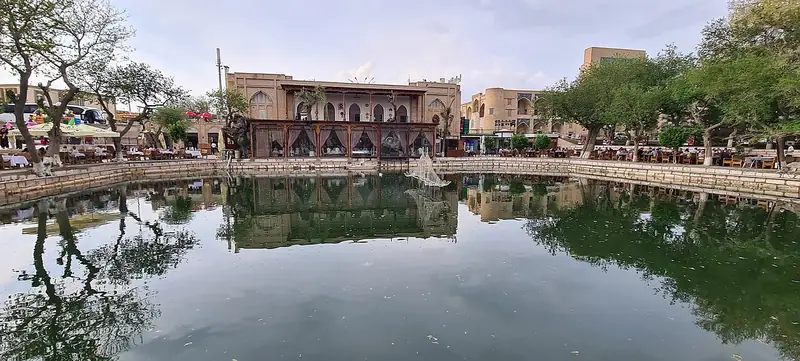
The best things to do in Bukhara are walking the old town between Lyabi-Hauz, the Kalon minaret and the Ark fortress, browsing the trading domes and spending the evening at a teahouse by the water. Almost every famous sight in Bukhara is a short walk from the next, so this is the easiest city in Uzbekistan to explore on foot.
Top sights in Bukhara old town
1. Lyabi-Hauz
Start at Lyabi-Hauz, a 17th-century pool shaded by old mulberry trees and surrounded by madrasahs. This is the living heart of the old town: people sit at the teahouses by the water, and a bronze statue of the folk hero Nasreddin Hodja rides his donkey nearby. See the Lyabi-Hauz ensemble page.
2. Kalon minaret and Po-i-Kalon
The Kalon minaret, built in the 12th century and almost 50 metres tall, is the symbol of Bukhara. A well-known story says Genghis Khan was so impressed that he spared it while destroying the city. It stands in Po-i-Kalon square between the large Kalon Mosque and the blue-domed Mir-i-Arab Madrasah, still a working religious school, so visitors usually see only its entrance. Read more on the Kalon minaret and mosque page.
3. The Ark fortress
The Ark is a huge walled fortress that was home to Bukhara's rulers until 1920. Inside are courtyards, a throne room and small history museums. Plan about an hour at the Ark fortress.
4. Bolo Hauz Mosque
Across the road from the Ark, the Bolo Hauz Mosque (early 18th century) has a tall wooden porch on slim carved columns that reflect in the pool in front. It is a working mosque, so dress modestly and avoid prayer times.
5. Samanid Mausoleum
In a park west of the Ark stands the 10th-century Samanid Mausoleum, one of the oldest Islamic buildings in Central Asia. It is small, but its baked bricks are laid in patterns that change as the sun moves. The Samanid Mausoleum looks best in early morning or late afternoon light.
6. Chor Minor
Chor Minor, an early 19th-century gatehouse with four turquoise-topped towers, hides in the residential lanes north-east of Lyabi-Hauz. It takes ten minutes to see, and finding it is half the fun.
7. The trading domes
Between Lyabi-Hauz and the minaret, the streets pass under 16th-century domed bazaars. Each had its own trade: Toqi Zargaron for jewellers, Toqi Telpakfurushon for hat sellers and Toqi Sarrafon for money changers. Today they sell carpets, suzani embroidery, ceramics and souvenirs. Start at Toqi Zargaron, near the minaret, and walk back towards Lyabi-Hauz. On the way, the Magoki Attori Mosque sits below today's street level.
8. Nadir Divan-Begi Madrasah
On the east side of Lyabi-Hauz, the 17th-century Nadir Divan-Begi Madrasah has an unusual tiled façade with two large birds and a sun with a human face, rare images on an Islamic building. In the tourist season its courtyard often hosts an evening folk music and dance show with dinner.
9. Sitorai Mohi Hosa summer palace
A short taxi ride north of the city, Sitorai Mohi Hosa was the summer palace of the last emir of Bukhara, built in the late 19th and early 20th centuries. Its rooms mix Russian, European and Uzbek styles, and peacocks walk in the gardens. Allow two to three hours with the ride. See the Sitorai Mohi Hosa Palace page.
10. Shukhov water tower
Near the Ark rises a steel lattice water tower from the late 1920s, built to a design by the Russian engineer Vladimir Shukhov. It looks out of place among the old brick buildings, which is why it is worth a look.
Experiences in Bukhara
11. A folk show and the puppet workshops
Besides the show at Nadir Divan-Begi, look for the puppet makers' workshops in the old town. Craftsmen carve and paint traditional puppets by hand, and some put on short shows for visitors.
12. A traditional hammam
Bukhara still has historic bathhouses near the trading domes, such as the Bozori Kord hammam, where you can have a steam bath and a massage. Men and women have separate times or rooms, so book ahead and check the current price.
13. A plov cooking class
Plov, rice cooked with meat, carrots and onions in a big pot, is the national dish, and Bukhara has its own way of making it. A Bukhara plov cooking class lets you cook it with a local family and then eat what you made.
14. Shopping for crafts
Bukhara is known for gold embroidery, suzani, carpets, miniature paintings and stork-shaped scissors. Many workshops let you watch the work before you buy. Prices are rarely fixed, so bargain politely.
15. Watching the sunset
The old town glows in the last light of the day, and the main sights are lit up after dark. The best spots:
- A rooftop café facing Po-i-Kalon: the minaret and domes turn gold, then light up. Arrive early for a table.
- Po-i-Kalon square: stay for the blue hour, when the lights come on.
- Outside the Ark walls: the tall walls take on a warm colour at the end of the day.
- Lyabi-Hauz: less of a view, but the best place for a quiet evening tea.
How many days do you need in Bukhara?
- One day covers the main sights of the old town if you start early.
- Two days suits most travellers: one for the centre, one for Sitorai Mohi Hosa, Chor Minor and a hammam or cooking class.
- Three days lets you add a day trip or simply enjoy the slower pace.
Where to stay in Bukhara
Stay in or near the old town so that you can walk everywhere. Many family guesthouses and boutique hotels are in restored old houses with courtyards and painted ceilings, a few minutes from Lyabi-Hauz. Prices range from budget to comfortable and rise in spring and autumn. Browse places to stay on our hotels page.
How to get to Bukhara
- By train: the Afrosiyob high-speed train takes about 4 hours from Tashkent and about 1.5–2 hours from Samarkand. See our guide to trains in Uzbekistan.
- By air: Bukhara airport has domestic flights from Tashkent and some international routes. Check before you travel.
- From Khiva: about 6–7 hours by train, or a long day by road across the desert.
The railway station is in the town of Kagan, about 15 km from the old town, so plan on a taxi ride of 20–30 minutes.
FAQ
Is Bukhara worth visiting?
Yes. Bukhara has kept more of its old town than any other city in Uzbekistan, and its quiet lanes and teahouses feel very different from the grand squares of Samarkand.
Is one day enough for Bukhara?
One day is enough for the main sights if you start early, but two days let you see the summer palace and enjoy the evenings without rushing.
Is Bukhara walkable?
Yes. Lyabi-Hauz, the trading domes, Po-i-Kalon, the Ark and the Samanid Mausoleum are all within walking distance. You only need a taxi for the station, the airport and Sitorai Mohi Hosa.
What is Bukhara famous for?
The Kalon minaret, the Ark, Lyabi-Hauz and the trading domes, and its history as one of the great cities of the Silk Road. It is also known for gold embroidery and its own style of plov.
What is the best time to visit Bukhara?
Spring (April to early June) and autumn (September and October) are the most pleasant. Summers are very hot, and winters are cold but quiet.
Samarkand or Bukhara: which is better?
Most travellers visit both. Samarkand has the grandest monuments, while Bukhara is the better city to wander and stay in.
Bukhara sits neatly between the other Silk Road cities: see our guides to things to do in Samarkand and the Khiva travel guide to plan the rest of your route.